









Understanding IPO Allotment in India: Regulations, Procedures, and Status Verification
The IPO allotment process is a crucial component of an initial public offering. After the subscription period concludes, this process determines which applicants receive shares and the quantity allocated to each. Depending on various factors such as the issue structure, investor classification, demand for subscription, and regulatory guidelines, investors may experience a full allotment, a partial allotment, or no shares at all.
In India, the IPO allotment adheres to the relevant regulatory framework and procedure outlined for the specific public offering. Familiarizing oneself with the allotment process can equip investors to track their applications, assess oversubscription data, and verify their results after the allotment basis is established.
What Is IPO Allotment?
IPO allotment entails the distribution of shares to eligible applicants once the subscription period concludes. When a company initiates an IPO, it offers a predetermined number of shares to investors under specific categories and conditions.
Shares may be allocated according to established rules if applications stay within the available share count. In instances where demand surpasses the supplied quantity of shares, the allotment process will be guided by the relevant category-based allocations and regulatory stipulations.
For instance, if an IPO designates a finite number of shares for retail investors but receives applications from a significantly larger group, not every applicant will necessarily be allotted shares. The ultimate distribution relies on the applicable allotment methodology.
Understanding IPO Allotment Mechanisms in India
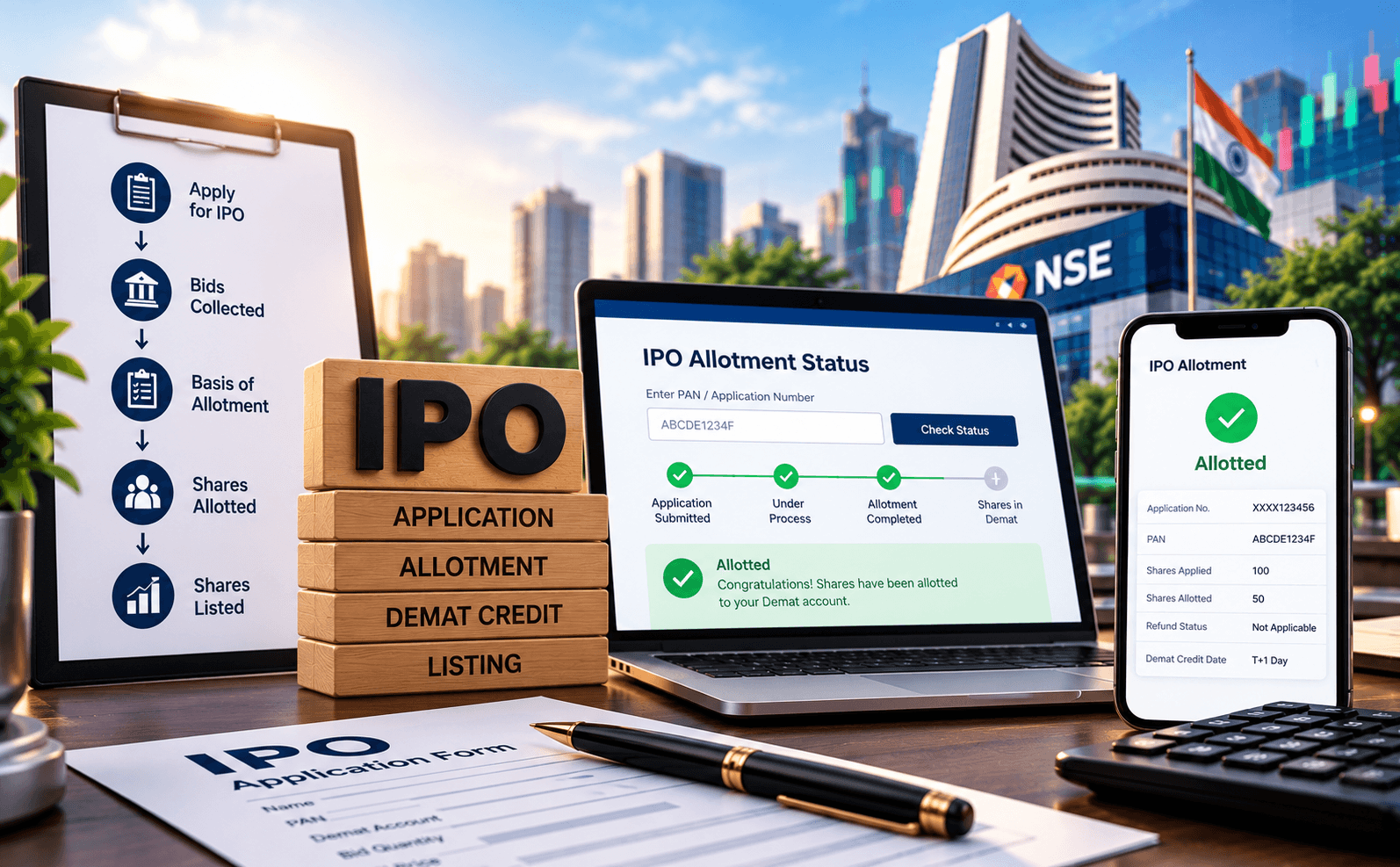
The IPO allotment procedure typically consists of several phases, from the closure of the offering to the successful transfer of shares into the demat accounts of fortunate applicants.
- Closure of IPO subscription: No new bids can be submitted after the predetermined closing period, adhering to established procedures.
- Processing of applications: Relevant intermediaries process the application and bidding details, including necessary payment information.
- Review of subscription data: Demand is evaluated across the various investor categories in line with the shares available for each segment.
- Finalization of the allotment basis: The company, registrar, and relevant intermediaries finalize the allotment process in accordance with the applicable rules.
- Publication of allotment status: Once the results are calculated, applicants can verify whether they have been allotted shares.
- Credit of shares: Shares allotted to successful applicants will be credited to their demat accounts as per the established timeline.
- Release of funds, where applicable: For unsuccessful applications or for excess funds not needed for final allocation, blocked amounts are released or refunds are initiated as per the method of application.
- Listing of shares: Shares of the company will be made available for trading post the completion of the exchange listing process.
The exact timing can vary by IPO, so investors should consult the issue schedule and official announcements for the relevant dates.
What Constitutes the Basis of Allotment in an IPO?
The basis of allotment describes the method by which shares are divided among applicants after an IPO concludes. This foundation is crafted in compliance with prevailing regulations, issue structures, and requirements tied to different investor categories.
In the case of an oversubscribed IPO, determining how many eligible applicants will receive shares and applying the appropriate allotment methodology is crucial. The allocation is not merely a straightforward distribution based on share requests by individual applicants.
In retail categories, established regulations generally aim to maximize the number of eligible individual applicants receiving the minimum bid lot, subject to the available allocation and other regulatory stipulations. If demand is too high for every eligible applicant to be allotted shares, a lottery or draw mechanism may be employed as part of the defined protocol.
Investors should consult the published basis of allotment for their specific issue to grasp the final outcome rather than assuming identical allotment criteria across all IPOs.
Influence of IPO Oversubscription on Allotment
Oversubscription occurs when demand for shares in an IPO outstrips the available quantity in a given category. It is typically reported as a multiple of the shares offered.
For example, if 1 million shares are offered in a category and valid demand reaches 5 million shares, that particular category is oversubscribed fivefold.
While oversubscription can heighten competition for allotment, its impact varies by investor category and the relevant allotment guidelines. A highly subscribed IPO does not guarantee that every applicant will receive shares, and the subscription multiple alone does not dictate the results for individual applicants.
Investors can observe demand from the IPO subscription tracking page, being mindful of the reporting time and pertinent category.
IPO Allotment Guidelines for Various Investor Classes
Public issues might allocate sections for different investor categories. The allocation and allotment processes hinge on the nature of the issue and current regulatory standards.
1. Retail Individual Investors
Retail individual investors apply under the specific limits and conditions of their category. In an oversubscribed retail segment, allotment follows prescribed methodologies, which may result in some valid applicants receiving no shares.
2. Non-Institutional Investors (NII)
The non-institutional investor category typically encompasses eligible applicants who do not apply as qualified institutional buyers or retail individual investors. This group may include high-net-worth individuals, adhering to the relevant requirements. Allocation and allotment depend on the issue structure and prevailing regulations.
3. Qualified Institutional Buyers (QIBs)
Qualified institutional buyers are institutional investors recognized under the applicable regulatory framework. The QIB segment has specific allocation requirements, with allotment managed in accordance with the rules governing the issue.
4. Shareholders and Other Reserved Categories
Certain IPOs may have provisions for eligible shareholder reservations or other approved categories, which are applicable only when stipulated in the issue documents. Investors should review relevant offer documents to determine if a reservation applies to them.
Checking Your IPO Allotment Status Online
After the basis of allotment has been established and results are made public, investors can ascertain their IPO allotment status via the pertinent registrar or available exchange facility. IPO tracking platforms may also assist investors in finding the correct status-checking resource.
- Access the allotment status service: Navigate to the registrar's official website or the relevant exchange facility for the IPO.
- Choose the IPO: Select the company or public issue from the list provided.
- Input necessary details: Depending on the platform, you may need to enter your PAN, application number, demat account information, or another recognized identifier.
- Submit the details: Follow the instructions on the official status-checking page.
- Review the outcome: Verify whether shares have been allotted and confirm the number of shares, if available.
Additionally, you can visit the IPO allotment status page on IPO Trend for information on tracking allotment. The availability of results depends on the schedule of publication and the data provided for the particular issue.
For your own security, always use official websites and refrain from sharing banking passwords, UPI PINs, or one-time passwords with anyone claiming to assist you in checking allotment results.
What If You Do Not Receive IPO Allotment?
If an applicant does not receive shares, the application amount is generally unblocked or refunded, following the payment method and issue process in place. For ASBA and UPI-based applications, how blocked funds are treated can differ from traditional refunds, as amounts are often held instead of transferred to the issuer prior to allotment.
Applicants should check their banking application or account for the status of the mandate or blocked amount. If funds remain inaccessible beyond the expected timeframe, they should reach out to their bank, broker, or relevant intermediary through official support channels.
Failure to receive an allotment does not automatically indicate that the application was invalid. In an oversubscribed issue, a legitimate application may simply be ineligible for share allocation according to the relevant allotment process.
Timing of IPO Shares Crediting to Demat Accounts
Shares are typically credited to successful applicants' demat accounts as per the IPO's announced timeline and regulatory procedures. Allotment results and demat credits may not occur simultaneously, depending on processing times and updates by the depository.
Investors should ensure their demat account information was correctly provided and check the official issue timeline. If expected credits do not appear, they can contact their registrar, broker, or depository participant for guidance.
Can You Trade IPO Shares Immediately After Allotment?
Generally, IPO shares are available for trading once the stock exchange listing is finalized. Receiving an allotment does not necessarily mean that the shares can be traded before market listing. Investors must adhere to the relevant processes of the exchange and depository.
After listing, the market price might be above, equal to, or below the IPO issue price. Investors should recognize that listing gains are not assured, and sales decisions carry inherent market risks.
Frequent Reasons for Not Receiving IPO Allotment
- Oversubscription: Demand within the relevant category surpasses the available allocation.
- Invalid application details: Information may be incorrect or inconsistent with required records.
- Payment or mandate complications: The necessary ASBA or UPI mandate may not have been completed or processed correctly.
- Duplicate or disqualified applications: Applications failing to meet applicable conditions may face rejection.
- Category or eligibility discrepancies: An application may not fulfill the requirements for its chosen category.
- Delays in processing or data: Status updates may not be immediately available while intermediaries refresh their systems.
These elements are potential causes rather than an exhaustive list. If an application is identified as unsuccessful or its status is ambiguous, applicants should verify results with the official registrar or relevant intermediary.
Commonly Asked Questions Regarding IPO Allotment
How long does the IPO allotment process take?
The timeline varies based on the issue's schedule and relevant procedures. Investors should consult the announced allotment date and official updates rather than assuming all IPOs follow the same timeline.
Do multiple applications guarantee IPO allotment?
No. Submitting applications for a larger number of lots does not ensure allotment. The final result relies on investor categories, available shares, demand for subscriptions, and applicable allotment guidelines.
Is it possible to check my IPO allotment status using PAN?
Many registrar services offer a PAN-based search option, but methods may differ. Utilize the features indicated on the official website for the specific IPO.
What does the term “not allotted” signify?
This indicates that no shares have been allocated to the applicant for that issue. The applicant should review the official results and confirm the release of any blocked funds.
Does a high IPO subscription guarantee listing profits?
No. A high subscription reflects robust demand during the bidding period, but it does not assure that the stock will list at a premium or yield subsequent returns.
Where can I access IPO subscription and allotment information?
Subscription data can be found on the IPO subscription page, and allotment information can be accessed through the IPO allotment status tracker. Ensure vital details are confirmed by the official registrar, exchange, and issue announcements.
Conclusion
The IPO allotment process dictates how shares will be allocated among eligible applicants after a public offering's closure. This procedure encompasses application processing, category-based allocations, the finalization of the allotment basis, result publication, and the crediting of shares to successful applicants.
Investors can enhance their understanding of their outcomes by consulting the official issue schedule, evaluating subscription figures by category, and utilizing authorized allotment status services. It is essential to note that oversubscription does not guarantee allotment, and receiving shares does not ensure listing profits.
Disclaimer: This article serves solely for educational and informational objectives and does not constitute investment advice or a recommendation to apply for any IPO. Allotment procedures and regulatory guidelines may evolve. Investors should examine the latest offer documents and official insights from the relevant registrar, stock exchange, and the Securities and Exchange Board of India (SEBI) prior to making investment decisions.